

The Challenge of Audit Fatigue
Vendors evidence re-use multiple audits iso 27001 compliance is a critical strategy for organizations facing the burden of maintaining certification across multiple security frameworks. Here’s how to maximize your evidence for compliance efficiency:
- Control Mapping – Identify where ISO 27001 controls overlap with SOC 2, HIPAA, PCI DSS, and other frameworks (often 70%+ overlap)
- Unified Control Library – Create a single repository where evidence can be tagged and mapped to multiple framework requirements
- Evidence Tagging – Label each piece of evidence with metadata (control ID, framework, collection date, owner) for easy retrieval
- Automation – Integrate evidence collection with your existing systems to ensure current, accurate documentation
- Chain of Custody – Maintain tamper-proof storage and audit trails to ensure evidence integrity across all audits
If you’ve ever managed a security audit, you know the drill: dig through screenshots, track down logs, export reports, organize documentation, repeat. Now multiply that effort across several security frameworks, and you’ve got a full-time job just collecting evidence.
Most companies still treat evidence collection as a manual, framework-by-framework process. But when you’re juggling ISO 27001, SOC 2, HIPAA, and other compliance standards, this approach creates audit fatigue, overwhelming your team with redundant work and increasing the risk of errors or missed requirements.
The good news? Many security frameworks have significant control overlap. More than 70% of ISO 27001:2022 controls map to SOC 2 Trust Services Criteria. This means you can collect evidence once and use it for multiple audits, dramatically reducing prep time and ensuring consistency across all your compliance efforts.
As Ben Townsend, founder and CEO of Tracker Products, I’ve spent two decades helping law enforcement agencies and organizations modernize their evidence management for vendors evidence re-use multiple audits iso 27001 compliance. Our SAFE platform is deployed in over 370 agencies, proving that a unified, cloud-native approach to evidence management isn’t just efficient; it’s essential for maintaining compliance without burning out your team.

Terms related to vendors evidence re-use multiple audits iso 27001 compliance:
The High Cost of Disjointed Evidence Management
We’ve all been there: the audit letter arrives, and a collective groan echoes through the office. Immediately, teams scramble, digging through screenshots, tracking down logs, and exporting reports from disparate systems. This isn’t just an inconvenience; it’s a significant drain on resources and a major risk to your organization’s security posture.
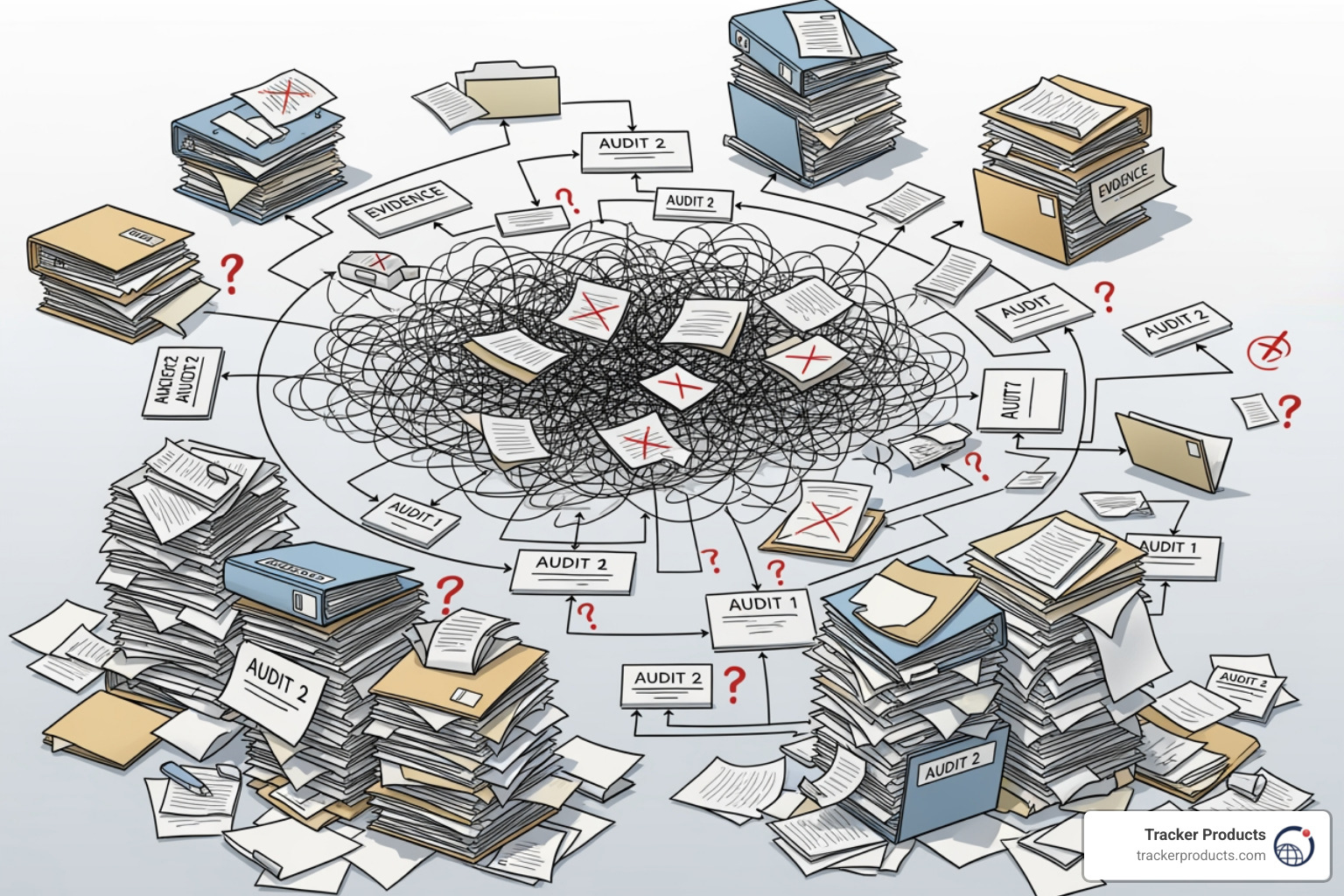
Most organizations still rely on manual processes to manage compliance evidence, such as spreadsheets, shared drives, and email chains that seem to multiply overnight. When your access control logs live in one system, your security policies sit in another folder, and your training records exist somewhere in a manager’s inbox, you’re setting yourself up for failure.
This scattered approach creates inconsistent data across audits. The same piece of evidence might be formatted one way for ISO 27001, then reformatted entirely for SOC 2, and presented differently again for HIPAA. Not only does this waste countless hours, but it also increases your risk of non-compliance. When auditors can’t easily verify your controls because evidence is outdated or poorly organized, you’re gambling with your certifications.
The numbers tell a sobering story. Organizations with ineffective evidence management face up to 40% more regulatory overhead than necessary. That’s real money and real time that could be spent strengthening your actual security posture instead of chasing down paperwork. Even worse, major issues in cyber evidence management can increase incident impact by over 30% because disjointed systems mean slower response times and greater difficulty proving due diligence when it matters most.
When a digital security incident occurs, the average cost can reach millions of dollars. Without a clear chain of custody and organized evidence, your ability to investigate, respond, and demonstrate compliance becomes severely compromised. For vendors evidence re-use multiple audits iso 27001 compliance efforts, this fragmented approach is particularly painful, as you’re essentially doing the same work multiple times while introducing more opportunities for errors.
The solution isn’t to work harder at managing spreadsheets. It’s to fundamentally rethink how you collect, store, and present evidence across all your compliance frameworks.
The “Collect Once, Use Many” Strategy for Multi-Framework Compliance
The secret to conquering audit fatigue and dramatically cutting compliance costs isn’t some complex trick. It’s a simple, powerful idea: “collect once, use many.” This strategy taps into the common ground shared by various compliance frameworks. It lets you use a single piece of evidence to satisfy many audit requirements at once.
Think about it: did you know that more than 70% of controls overlap between ISO 27001 and SOC 2? That’s a huge overlap! This means a fantastic chance to save time and money. By setting up one reliable source for all your evidence, you can make your audits much smoother. This also ensures your reports are consistent and accurate across the board. This smart approach to evidence audit & compliance turns compliance from a stressful rush into a real advantage. It’s all about smart vendors evidence re-use multiple audits iso 27001 compliance.
Leveraging Control Mapping to Unify Audits
At the heart of the “collect once, use many” strategy is something called control mapping. This is simply figuring out when one of your security practices meets the rules for different frameworks. Picture it like creating a master blueprint. This blueprint shows how your security steps line up with ISO 27001, SOC 2, HIPAA, and other standards.
For example, imagine you have a control for “user access reviews.” This means checking who has access to your systems and making sure it’s correct. This one control might be needed for ISO 27001 Annex A (like A.5.15 for access control), a SOC 2 Trust Services Criteria (like CC6.1 for logical and physical access), and HIPAA (to protect patient health information). By mapping these common controls, you avoid testing the same thing over and over. Instead, you can focus on any unique rules or gaps you find. This “gap analysis” helps you use your resources wisely and build a stronger, more connected compliance program.
The Power of a Unified Control Library
Once you’ve mapped your controls, the next step is to gather them into one unified control library. This central spot becomes the single source of truth for all your compliance work. Organizations that use a unified control library can reuse evidence for a whopping 80-90% of overlapping controls! Imagine that for frameworks like SOC 2, ISO 27001, HIPAA, PCI DSS, and even GDPR. Think of all the time you’d save when a single document or log can satisfy auditors for multiple certifications!
Besides making things super-efficient, a unified control library also makes your compliance consistent. It ensures your policies, procedures, and evidence all line up. This lowers the chance of confusing information or bad audit findings. It also makes preparing for audits much easier. Your teams will know exactly where to find what they need, no matter which framework is being audited. It’s like having one universal remote for all your compliance channels.
Evidence Tagging and Categorization for Easy Retrieval
A unified control library is only helpful if you can find what you need, right? That’s where evidence tagging and categorization come in. By adding important details, or “metadata,” to each piece of evidence, you make it instantly searchable. You can tag evidence by the specific control it relates to, the framework(s) it applies to, when it was collected, and who’s in charge of it.
For instance, a screenshot showing a successful penetration test could be tagged for ISO 27001 (A.8.28 for security testing), SOC 2 (CC7.1 for system monitoring), and PCI DSS (Requirement 11.3 for penetration testing). When an auditor asks for proof of penetration testing, your system can quickly pull up the right, up-to-date evidence. This includes knowing who handled it and when. This level of organization makes auditor requests much simpler, cuts down on back-and-forth, and shows you have a mature, well-managed compliance program. Plus, with version control, auditors always see the most current and accurate picture of your controls.
How Tracker Products Facilitates Evidence Re-use for Multiple Audits and ISO 27001 Compliance
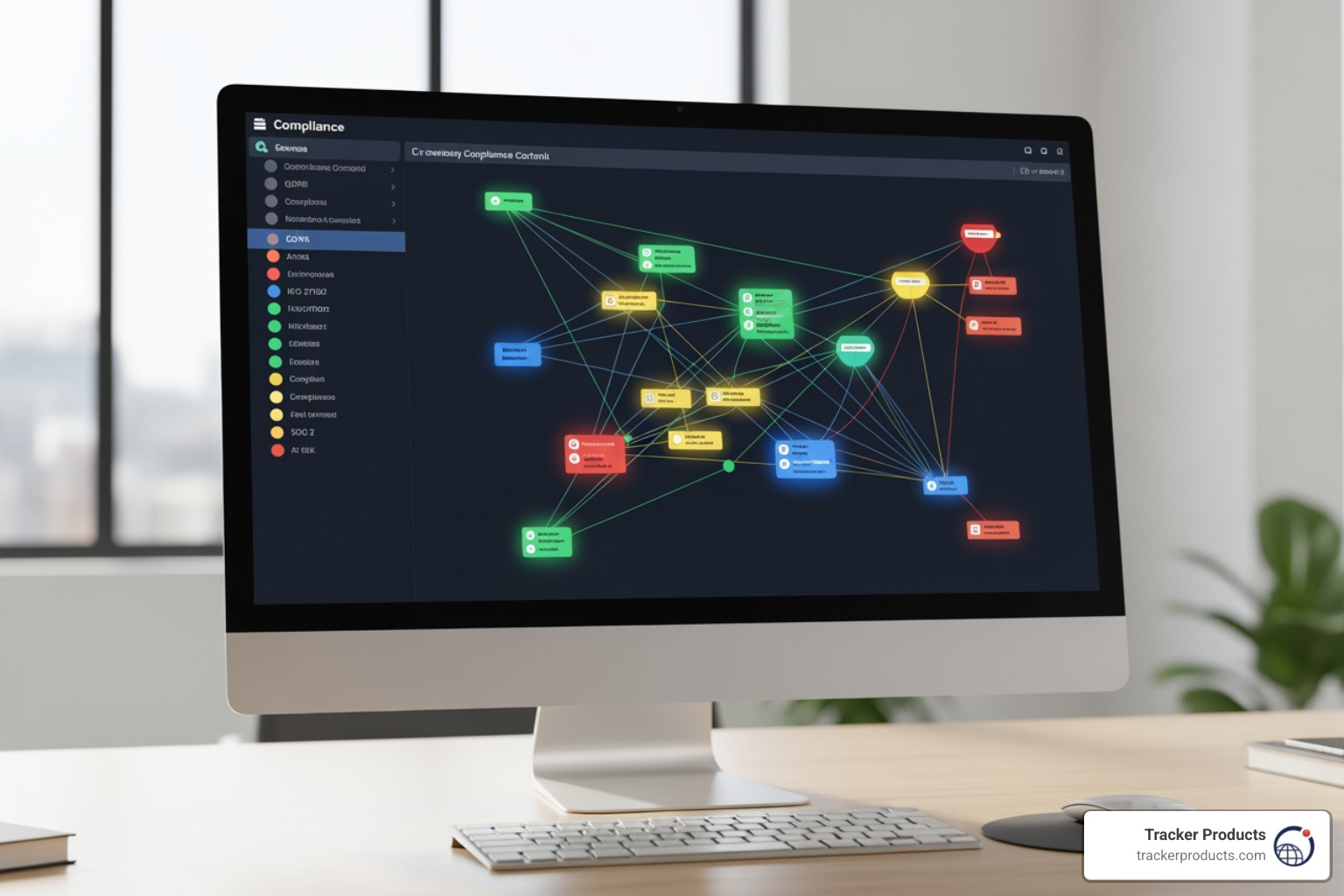
Navigating security audits can feel like a constant uphill battle, especially when you’re a vendor trying to prove your commitment to security. At Tracker Products, we understand this challenge. Our SAFE platform is specifically designed to make vendors evidence re-use multiple audits iso 27001 compliance not just possible, but incredibly straightforward. This means streamlining client security assessments and speeding up sales cycles, giving you a real competitive edge. Imagine responding to client compliance requests 50% faster – that’s the power of having your evidence organized and ready, helping you pass client audits with confidence and build lasting trust.
Building a Scalable Process for Vendors’ Evidence Re-use Across Multiple Audits
Building a truly scalable and repeatable process for evidence collection is crucial for long-term compliance success. It’s about embedding compliance into your daily operations, not just seeing it as a yearly scramble. Here’s how we recommend approaching it:
First, define ownership. Clearly assign who is responsible for each control or type of evidence. This ensures accountability and clarity. Next, establish review cadences. Compliance isn’t static; evidence needs regular check-ups and updates to stay current. We also advocate for continuous monitoring, moving beyond just periodic checks to always-on oversight, ensuring your documentation is consistently up-to-date and correctly linked.
Before facing external auditors, conduct regular internal audits. Think of these as critical “dress rehearsals” that allow you to find and fix any gaps in a safe environment. Finally, leverage technology like our SAFE platform. It centralizes control mapping, automates evidence gathering, and manages workflows, changing evidence management from a manual burden into an efficient, repeatable process. For more insights into managing digital evidence effectively, explore our guide on What is Digital Evidence Management? Tools and Insights.
The Role of Automation in Streamlining Evidence Collection
Automation is a true game-changer in compliance. It takes away the tedious, manual work of evidence collection, ensuring your documentation is always current, accurate, and ready to go. Within Tracker Products SAFE, we seamlessly integrate with your cloud services and internal systems. This allows us to automatically gather security configurations, access logs, and other critical artifacts without you lifting a finger.
This automation significantly reduces audit prep time – our clients often see it cut by over 66%! Instead of scrambling for weeks to prepare, your teams can get ready for audits in a fraction of the time. Automation guarantees that your evidence is consistent, complete, and perfectly linked to the relevant controls, dramatically simplifying the entire audit process. It’s a huge relief for compliance teams and auditors alike. Find more about how we achieve this through Automating Evidence Collection for Compliance Audits.
Ensuring Evidence Integrity and Consistency
The trustworthiness of your evidence is paramount. For vendors evidence re-use multiple audits iso 27001 compliance, maintaining an unbroken chain of custody is not just good practice – it’s absolutely essential. Our SAFE platform includes robust features to ensure every piece of evidence remains tamper-proof, from the moment it’s collected until it’s presented to auditors.
This includes tamper-proof storage, guaranteeing that once evidence is captured, it cannot be altered without detection. We implement stringent access controls, so only authorized personnel can view sensitive evidence. Every interaction with your evidence is carefully recorded in detailed audit trails, providing a crystal-clear history of who accessed it, what they did, and when. This eliminates any “he said, she said” scenarios, offering irrefutable proof. With automatic versioning, you’ll always have the most current document, along with its full history. Plus, our secure retention policies ensure your data is kept according to legal requirements and operational needs. These measures collectively ensure your evidence is always reliable, defensible, and ready for scrutiny, whether for an internal review or an external audit. This is the core of Evidence Lifecycle Management.
Key Differences and Overlaps: ISO 27001 vs. Other Frameworks
While it’s fantastic that we can often reuse so much evidence, thanks to the significant overlaps across security frameworks, it’s also super important to understand their unique flavors. Think of it like this: different dishes might share many ingredients, but the way they’re prepared and seasoned makes them distinct. ISO 27001 and SOC 2, for example, serve different purposes, and that shapes what auditors look for in terms of scope and evidence.
To put it simply, ISO 27001 is an international standard all about setting up, running, and constantly improving an Information Security Management System (ISMS). It’s focused on the system you have in place to manage security. SOC 2, on the other hand, is a report from the AICPA that checks how well a service organization’s controls actually work against specific Trust Services Categories. So, while ISO is about your security blueprint, SOC 2 is about the proof that your blueprint is being followed effectively over time. Understanding these distinctions is key for vendors evidence re-use multiple audits iso 27001 compliance.
Understanding Evidence Requirements for ISO 27001 Compliance
For ISO 27001, auditors want to see clear proof that your ISMS isn’t just a paper exercise. They want to know it’s well-defined, actually put into practice, and constantly getting better. Here’s what they’ll typically ask for:
First, your ISMS Documentation is vital. This includes everything from the boundaries of your ISMS to your overall information security policy and your security goals. It sets the stage for your entire security program.
Then, there’s your Statement of Applicability (SoA). This is a super important document where you list every ISO 27001 Annex A control you’ve decided to implement, and just as crucially, explain why you might have excluded any. It shows you’ve thought through your choices.
You’ll also need Risk Assessment Reports, proving that you’ve systematically looked for, analyzed, and evaluated all your information security risks. And hand-in-hand with that are your Risk Treatment Plans, which show exactly how you plan to tackle those identified risks.
Auditors will also check your Internal Audit Results. These are records of your own internal reviews, showing that you’re regularly checking your ISMS for effectiveness, just as Clause 9.2 requires. And don’t forget the Management Review Minutes! This is evidence that your top leaders regularly sit down to review how well the ISMS is working, making sure it’s suitable and adequate for your business.
Finally, for the Annex A Controls themselves, you’ll need specific evidence. This could be anything from your access control policies to your incident response procedures, or even records of your security awareness training sessions. Each piece shows that you’re actively managing security.
Comparing with SOC 2 Evidence Needs
SOC 2 audits, especially the more common Type 2 reports, zoom in on how well your controls have actually worked over a period – usually 3 to 12 months. The Security category is always mandatory, but you might also choose to be audited on Availability, Processing Integrity, Confidentiality, or Privacy, depending on the services you provide.
While both ISO 27001 and SOC 2 care about many of the same security topics, they often look for different types of evidence. ISO 27001 tends to focus more on having strong policies and procedures in place. SOC 2, on the other hand, puts a much bigger emphasis on operational logs and solid proof that those policies have been executed and are truly effective over time. It’s the difference between showing a recipe and showing a perfectly cooked meal.
Here’s a quick look at how typical evidence might differ for an access control requirement:
| Requirement/Control | ISO 27001 Evidence | SOC 2 Evidence |
|---|---|---|
| Access Control (e.g., User Access Reviews) | – Access Control Policy – Access Review Procedure – Risk Assessment showing access control as a treatment – SoA entry |
– Access Review Logs (showing reviews performed and dates) – User Access Reports – Evidence of Segregation of Duties – Screenshots of access management system |
As you can see, both frameworks certainly want to see your “Access Control Policy.” But for SOC 2, auditors will really dig into the logs and reports. They want to see tangible proof that you’re not just saying you do user access reviews, but that you’re actually doing them, and that they’re effective over time. This crucial distinction is what makes smart evidence reuse possible and truly effective.
Frequently Asked Questions about Evidence Reuse
Let’s address some of the most common questions we hear about vendors evidence re-use multiple audits iso 27001 compliance. These are real concerns from real teams struggling with the same challenges you might be facing.
What is the biggest challenge in reusing evidence for multiple audits?
The primary challenge is the lack of a centralized system. It sounds simple, but this one issue creates a domino effect of problems. Without proper control mapping and a unified library, organizations struggle to track which evidence applies to which control across different frameworks. The result? Manual, repetitive work that drains your team’s time and energy.
Picture this: your team spent hours compiling access logs for your ISO 27001 audit. Three weeks later, your SOC 2 auditor asks for the exact same logs, but you can’t remember where you stored them or which version was the final one. So you start from scratch, wasting valuable time recreating evidence that already exists somewhere in your shared drives or email threads.
This isn’t just inefficient; it’s costly. Teams end up spending excessive amounts of time gathering the same types of evidence multiple times, leading to burnout, increased costs, and a higher risk of inconsistencies that could trigger audit findings. When evidence is scattered across spreadsheets, shared drives, and individual laptops, you’re essentially starting fresh with each new audit.
How does evidence reuse impact the role of an auditor?
This is where things get interesting. Evidence reuse actually makes life better for everyone involved in the audit process, including the auditors themselves. When we provide auditors with well-organized, pre-mapped evidence, they can more quickly verify controls that map across multiple frameworks by reviewing a single piece of evidence.
Think about it from their perspective. Instead of wading through duplicate documents and trying to piece together your compliance story, they can see a clear, organized trail that demonstrates how one control satisfies multiple framework requirements. This allows them to focus their expertise where it matters most: on unique or high-risk controls that require deeper scrutiny.
For us at Tracker Products, implementing a robust evidence reuse strategy means providing auditors with a clear, organized, and verifiable evidence trail. This speeds up their review process dramatically, which ultimately accelerates our certification timeline. It’s a win-win situation. Auditors appreciate the efficiency and clarity, and we appreciate the faster turnaround and smoother audit experience. The audit becomes more of a collaborative verification process rather than a stressful scramble.
Can all evidence be reused across different compliance frameworks?
Here’s the honest answer: not always, and that’s okay. While there is significant overlap, often up to 80-90% for some frameworks, certain standards have unique requirements that demand framework-specific evidence. For example, a particular framework might require evidence from a specific time period, in a particular format, or with additional contextual information.
A SOC 2 Type 2 audit, for instance, requires operational logs demonstrating control effectiveness over a continuous period (typically 3-12 months). Your ISO 27001 audit might accept a policy document and a recent sample review. The underlying control is the same, but the evidence requirements differ in scope and format.
This is why a robust evidence management strategy involves identifying both reusable and framework-specific evidence. The goal isn’t to force every piece of evidence to fit every framework. That’s neither realistic nor effective. Instead, the goal is to maximize reuse where appropriate while maintaining the flexibility to provide unique evidence when required.
By understanding these nuances and building a system that accommodates both shared and unique requirements, you can achieve true vendors evidence re-use multiple audits iso 27001 compliance without compromising the integrity or thoroughness of any individual audit. It’s about working smarter, not harder, while ensuring that each framework gets exactly what it needs.
Conclusion: Achieve Continuous Compliance with a Unified Strategy
If there’s one thing I’ve learned after two decades in evidence management, it’s this: compliance doesn’t have to be painful. The endless cycle of scrambling for evidence, reformatting documents, and repeating the same work for different audits? That’s not inevitable. It’s a choice, and you can choose differently.
When you accept vendors evidence re-use multiple audits iso 27001 compliance as a core strategy, everything changes. Instead of treating each audit as a separate mountain to climb, you’re building a solid foundation that supports all your compliance needs simultaneously. Your team stops drowning in spreadsheets and starts focusing on what actually matters: strengthening your security posture and serving your clients better.
The numbers speak for themselves. Organizations using our unified approach see their audit preparation time drop by over 66%. They respond to client compliance requests up to 50% faster, which means closing deals quicker and building trust more effectively. The cost savings are substantial too. Cutting regulatory overhead by up to 40% frees up budget for innovation rather than administration. And perhaps most importantly, when your evidence management is tight and organized, you reduce incident impact by over 30%, because you can respond faster and prove your due diligence without hesitation.
Our SAFE platform brings this unified strategy to life in practical, tangible ways. It centralizes your evidence management, so everything lives in one secure, searchable place. It automates collection, so your team isn’t manually chasing down logs and screenshots every quarter. It ensures integrity through robust chain of custody tracking, giving auditors and clients the confidence they need. And it provides crystal-clear visibility across all your frameworks-like ISO 27001, SOC 2, HIPAA, and PCI DSS-so you always know exactly where you stand.
This isn’t just about checking boxes or passing audits. It’s about changing compliance from a burden into a competitive advantage. When you can demonstrate your security posture instantly and accurately, you move faster than competitors still stuck in manual processes. When your team isn’t exhausted from audit fatigue, they have energy for strategic initiatives that actually move your business forward.
Achieve audit readiness with a unified evidence management platform and find what continuous compliance really means. It means sleeping better at night, knowing your evidence is secure, current, and ready whenever you need it. It means saying “yes” to new compliance requirements without panic. It means building a security program that scales with your growth, rather than holding you back.
The path forward is clear. Start with control mapping to identify where your frameworks overlap. Build your unified control library as your single source of truth. Tag and organize your evidence so it’s instantly retrievable. Automate what you can, and let technology handle the repetitive work. And most importantly, maintain that evidence integrity so every audit becomes smoother than the last.
Your team deserves better than endless audit cycles. Your clients deserve faster, more confident responses. And your organization deserves a compliance strategy that actually works. Let’s make it happen together.


