

Understanding Evidence Audit Compliance
Evidence audit compliance is crucial for ensuring accountability and trust, especially in law enforcement. It is the process of collecting, managing, and reviewing information to verify that an organization follows all required standards, regulations, and internal policies. For law enforcement, proper compliance ensures cases hold up in court and strengthens public trust by demonstrating procedural correctness and data accuracy.
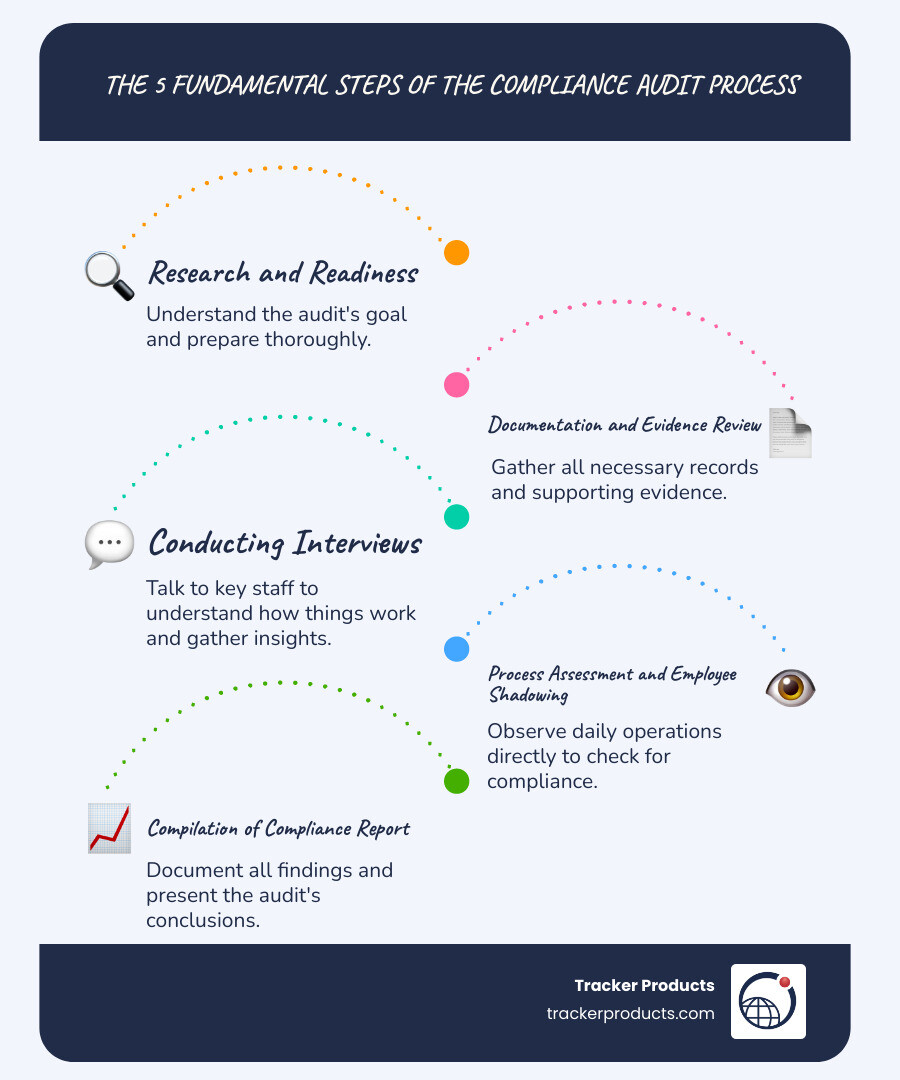
At its core, achieving effective evidence audit compliance involves a clear, structured approach. Here are the 5 fundamental steps often found in a successful compliance audit process:
- Research and Readiness: Understand the audit’s goal and prepare thoroughly.
- Documentation and Evidence Review: Gather all necessary records and supporting evidence.
- Conducting Interviews: Talk to key staff to understand how things work and gather insights.
- Process Assessment and Employee Shadowing: Observe daily operations directly to check for compliance.
- Compilation of Compliance Report: Document all findings and present the audit’s conclusions.
I’m Ben Townsend, founder and CEO of Tracker Products. With over two decades in the field, I’ve seen how crucial effective evidence audit compliance is for law enforcement, driving the development of the SAFE platform to modernize property room operations.
The Foundation: What Is Audit Evidence and Why Is It Critical?
Audit evidence is the proof an auditor uses to determine if an organization’s statements and practices are accurate, complete, and compliant. In law enforcement, effective evidence audit compliance means every piece of physical and digital property, record, and action is verifiable and defensible.
The goal of audit evidence is to ensure accuracy and fairness. For businesses, this means verifying financial records against standards like GAAP or IFRS. For law enforcement, it’s about maintaining the integrity of investigations and court proceedings, which builds public trust. Adherence to strict protocols, like chain-of-custody, isn’t just good practice; it’s a legal and ethical requirement.
For example, a financial auditor might physically count inventory to confirm revenue figures or get bank statements directly from the bank to verify balances. Similarly, law enforcement relies on body-worn camera footage, forensic reports, and property room logs as vital audit evidence.
The Public Company Accounting Oversight Board (PCAOB) defines auditing evidence as all information auditors use to form their opinion. Their Auditing Standard No. 15 details requirements for obtaining sufficient, appropriate evidence, highlighting the universal need for a solid basis for audit opinions.
Non-compliance carries serious consequences, including financial penalties and loss of public confidence. For instance, the PCAOB fined KPMG Colombia $4 million in 2022 for improperly changing audit documentation. This example underscores why meticulous, uncompromised record-keeping is non-negotiable.
The Core Purpose of Auditing Evidence in Compliance
At its core, audit evidence exists to support, verify, or contradict the information management provides. It’s the factual foundation that allows auditors to draw sound conclusions about whether an agency’s operations align with its policies, regulations, and legal requirements. This process helps confirm that management assertions are accurate and ensures operational integrity. By identifying areas for improvement, we protect the community, officers, and the legal system. Without reliable audit evidence, accountability falters.
How Evidence Ensures Accuracy and Adherence to Standards
Audit evidence provides the objective data needed to confirm that financial statements are accurate and that operational procedures are being followed. For law enforcement, this same principle applies to the accuracy of case files and evidence handling. Ensuring transparent reporting means that the underlying facts are not only correct but are also presented clearly to all stakeholders, from judges to the general public.
For more detailed information on how we approach compliance and security specifically in evidence management, visit our dedicated page: More info about compliance and security.
The Anatomy of Defensible Audit Evidence

The quality of an audit depends on the quality of its evidence. It’s not just about the quantity of information, but collecting the right kind of information. This requires auditor judgment and professional skepticism to question and verify information, not just take it at face value.
Essential Characteristics of Reliable Audit Evidence
Strong, trustworthy audit evidence has a few key traits:
- Sufficiency: Is there enough evidence to support a conclusion? More is needed for higher-risk or more complex areas.
- Appropriateness: This is about the quality of the evidence, which includes its relevance and reliability.
- Relevance: Does the evidence directly relate to the assertion or control being tested? A physical inventory count is relevant to proving existence; a bank statement is not.
- Reliability: Can the information be trusted? Reliability depends on its source and nature. Evidence from independent, external sources is more reliable than internal records. Direct observation by an auditor is more convincing than second-hand accounts, and original documents are more trustworthy than copies.
The Institute of Internal Auditors (IIA) Standard 2330 states that good evidence must be “sufficient, reliable, relevant, and useful,” reminding us that every piece of evidence must meet these high standards.
Common Examples of Audit Evidence in Practice
In law enforcement and evidence audit compliance, evidence comes in many forms:
- Physical Evidence: Tangible items you can see or hold, such as items from a crime scene or assets in a property room. Each requires detailed documentation to maintain its integrity.
- Digital Evidence: A rapidly growing category including body-cam footage, computer logs, mobile device data, and forensic images. The challenge is proving authenticity and preventing tampering.
- Documentary Evidence: Paper or digital records that chronicle actions and transactions. Examples include incident reports, warrants, property room forms, and policy manuals.
- Analytical Evidence: Using data to spot trends or anomalies. An auditor might analyze inventory data to find discrepancies or review response times against policy benchmarks.
- Oral Evidence: Interviews, witness statements, and expert testimony. While valuable for context, oral evidence is less reliable on its own and should be corroborated with other evidence types.
Each type helps paint a complete picture for an auditor, contributing to a strong evidence audit compliance framework.
Mastering the Evidence Audit Compliance Process

Evidence audit compliance is best approached proactively, not reactively. Organizations that maintain a constant state of audit readiness experience smoother processes and fewer disruptions than those that scramble at the last minute.
Key Components for Successful Evidence Audit Compliance
Building a strong foundation for evidence audit compliance requires several key elements:
- Experienced Auditors: Auditors who understand the specific regulatory frameworks for law enforcement, like CJIS requirements and evidence handling standards.
- Organization-wide Buy-in: Compliance is a shared responsibility, from the chief to the newest officer. When everyone understands their role, the process is more sustainable.
- A Robust Evidence Management System: Manual processes and spreadsheets are insufficient. A modern system is needed to manage physical and digital evidence, maintain chain of custody, and provide comprehensive audit trails.
- Auditor Liaison Team: A dedicated point of contact for auditors streamlines communication and ensures consistency.
- Compliance Automation Tools: These tools reduce the burden of audit prep by handling repetitive tasks, monitoring controls, and centralizing data.
A 7-Step Checklist for Audit Preparation
This practical seven-step approach can make audit preparation manageable.
- Understand the scope: First, clarify what the audit will cover—which departments, systems, regulations, and timeframes. This prevents wasted effort.
- Draw a clear timeline: Work backward from the audit date to establish key milestones for preparation, evidence gathering, and remediation.
- Review your current compliance posture: Conduct an internal gap analysis to compare your practices against audit requirements. This allows you to fix issues before auditors find them.
- Allocate resources: Assign clear responsibilities and designate a single point of contact for auditors to prevent tasks from falling through the cracks.
- Implement remediation: Proactively address any identified gaps and document all remediation efforts to demonstrate a commitment to improvement.
- Gather and manage evidence: Systematically collect all required documentation and records. A strong evidence management system is invaluable here. Our Audit Evidence Collection Checklist and Best Practices offers more guidance.
- Build a collaborative relationship with the auditor: Approach the audit as a partnership. Open communication fosters a smoother process and better outcomes.
Best Practices for Gathering and Documenting Evidence
The quality of your documentation directly impacts the success of your evidence audit compliance.
- Thoroughness: Collect all pertinent information without exception.
- Accuracy: Even minor inaccuracies can undermine the credibility of your evidence.
- Consistency: Use standardized formats and procedures for all documentation.
- Promptness: Record evidence as close to the time of its collection as possible to preserve detail and context.
- Cross-referencing findings: Link all evidence back to the specific audit objectives it supports.
- Maintaining a clear chain of custody: Document every handoff and access event for all evidence. An unbroken chain of custody is the foundation of our justice system, a principle central to our approach to Evidence Lifecycle Management.
From Documentation to Reporting: Communicating Audit Findings
The final stage of evidence audit compliance is the audit report. This document is a critical communication tool that translates complex findings into clear, actionable insights for stakeholders, demonstrating the value of the audit and building confidence in the organization.
Audit Documentation vs. Audit Reporting: What’s the Difference?
Audit documentation and audit reporting serve different but equally important roles. Documentation is the detailed internal record, while reporting is the polished external communication.
| Feature | Audit Documentation | Audit Reporting |
|---|---|---|
| Purpose | Internal record of procedures, evidence, and conclusions | Formal communication of audit findings, scope, and opinion |
| Audience | Audit team, internal reviewers | Management, board of directors, regulators, external stakeholders |
| Content | Detailed workpapers, checklists, memos, evidence logs | Executive summary, clear findings, recommendations, management response |
| Format | Often extensive, technical, and highly detailed | Concise, structured, less technical, focused on key takeaways |
| Primary Goal | Support audit opinion, comply with standards | Inform, persuade, drive action, ensure transparency |
In short, documentation is the internal work that proves the audit’s conclusions. Reporting is the external summary that shares what was found and what it means.
Key Elements of a Compelling Audit Report
A great audit report is clear, concise, and impactful. It should include:
- An Executive Summary: A high-level overview of the audit’s scope, key findings, and overall conclusion.
- Clear Findings: Details of the issues found, grouped logically and written in plain language.
- Supporting Evidence: References to the proof that backs up each finding, showing conclusions are fact-based.
- A Risk Assessment: An explanation of the potential impact of identified issues.
- Practical Recommendations: Sensible, achievable steps for fixing problems and reducing risk.
- A Management Response: The organization’s official take on the findings and its plan to address them.
This Sample Independent Audit Report shows how a formal report is structured.
Overcoming Common Documentation and Reporting Challenges
Auditors often face challenges that require diligence and robust systems:
- Incomplete or inaccurate data: Requires auditors to seek out extra sources and carefully verify facts.
- High volume of evidence: Managing vast amounts of information requires effective organizational systems and tools.
- Lack of standardization: Inconsistent documentation can lead to disorganization. Clear guidelines and templates are essential.
- Data security concerns: Handling sensitive information requires strong security measures like encryption and strict access controls.
- Maintaining objectivity: Auditors must remain unbiased, relying on a strong ethical compass and professional skepticism.
The Role of Technology in Modern Auditing
Relying on manual processes for evidence audit compliance is no longer viable. Technology, especially automation, is now a necessity. It revolutionizes audits by increasing efficiency, reducing human error, and enabling continuous monitoring. Automation can save significant time on evidence collection (an average of 4.6 hours weekly), freeing up resources for more critical tasks.
Navigating Regulatory Frameworks like CJIS, HIPAA, and GDPR
The importance of audit evidence is clear when considering specific regulatory frameworks. For law enforcement, compliance with the Criminal Justice Information Services (CJIS) Security Policy is paramount, setting strict standards for how criminal justice information is handled. Robust audit trails and secure evidence management are non-negotiable requirements.
Similarly, regulations like the HIPAA requirements for healthcare data and the GDPR data protection rules for personal data demand that data handling is completely verifiable and auditable. For law enforcement, this means every piece of evidence must meet the highest standards of security and integrity.
How Automation Streamlines Evidence Audit Compliance
Automation is a game-changer for streamlining evidence audit compliance by handling repetitive, time-consuming tasks.
- Automated evidence collection reduces manual data entry errors and builds a complete, tamper-proof record of every action.
- A centralized control repository provides one secure, accessible location for all compliance-related documentation, simplifying retrieval during an audit.
- Real-time monitoring and alerts continuously watch for policy deviations, allowing for a proactive response to issues before they escalate.
- Streamlined workflows guide users through compliance processes, ensuring every step is followed and documented correctly every time.
By embracing specialized Evidence Software, organizations can transform compliance from a chore into a seamless part of daily operations.
Frequently Asked Questions about Evidence Audits
We often hear similar questions about evidence audit compliance. Here are answers to the most common ones, based on our experience.
What are the essential traits of reliable auditing evidence?
Reliable auditing evidence must be sufficient (is there enough?), appropriate (is it high-quality?), relevant (does it relate to the objective?), and reliable (is the source trustworthy?). Evidence obtained directly by the auditor from independent, external sources is considered the most reliable. For law enforcement, this means evidence like body-cam footage with a secure chain of custody is far more defensible than a verbal recollection.
What are the first steps to prepare for a compliance audit?
The first steps are to clearly understand the audit’s scope, including which regulations, departments, and timeframes are being reviewed. Next, establish a realistic timeline, conduct an internal gap analysis to review your current compliance posture, and assemble a dedicated team with a single point of contact for the auditors. Identifying and addressing gaps early is key. For more details, our Audit Evidence Collection Checklist and Best Practices is a helpful resource.
What’s the difference between audit documentation and an audit report?
Audit documentation is the detailed, internal working file that records all procedures, evidence, and reasoning behind the audit’s conclusions. It’s for the audit team and internal reviewers to prove the work was done properly.
An audit report is the formal, external-facing summary of the audit’s findings, scope, and recommendations. It’s written in accessible language for management, regulators, and other stakeholders to inform them of the results and drive action.
In short, documentation proves the work; the report communicates the results.
Conclusion
Evidence audit compliance is a continuous commitment to integrity, transparency, and accountability. It requires defensible evidence and structured processes. The key takeaway is that a proactive approach to compliance is no longer a best practice—it’s a necessity in today’s complex regulatory landscape.
Managing this with manual methods is inefficient and risky. Technology is indispensable for managing both physical and digital evidence, automating tasks, ensuring an unbroken chain of custody, and providing real-time insights.
Our SAFE software from Tracker Products is built for this mission. It helps law enforcement agencies achieve and maintain top-tier evidence audit compliance with a unified, future-proof platform. SAFE effortlessly handles physical and digital evidence, automates tasks, and exceeds stringent security standards like CJIS. This allows agencies to focus on their core mission, confident that their evidence is secure, verifiable, and compliant.
If you’re ready to transform your agency’s evidence audit compliance from a challenge into a streamlined process, we invite you to learn more. See how we can help you steer the complexities of evidence audits with ease by visiting our dedicated page: Compliance & Security – Evidence Management.


